Cross-Platform Hedging Loops: Synchronizing Exchange Lays with Accumulator Boosts for Overlap Gains
Harper Albrecht · Aug 26, 2026
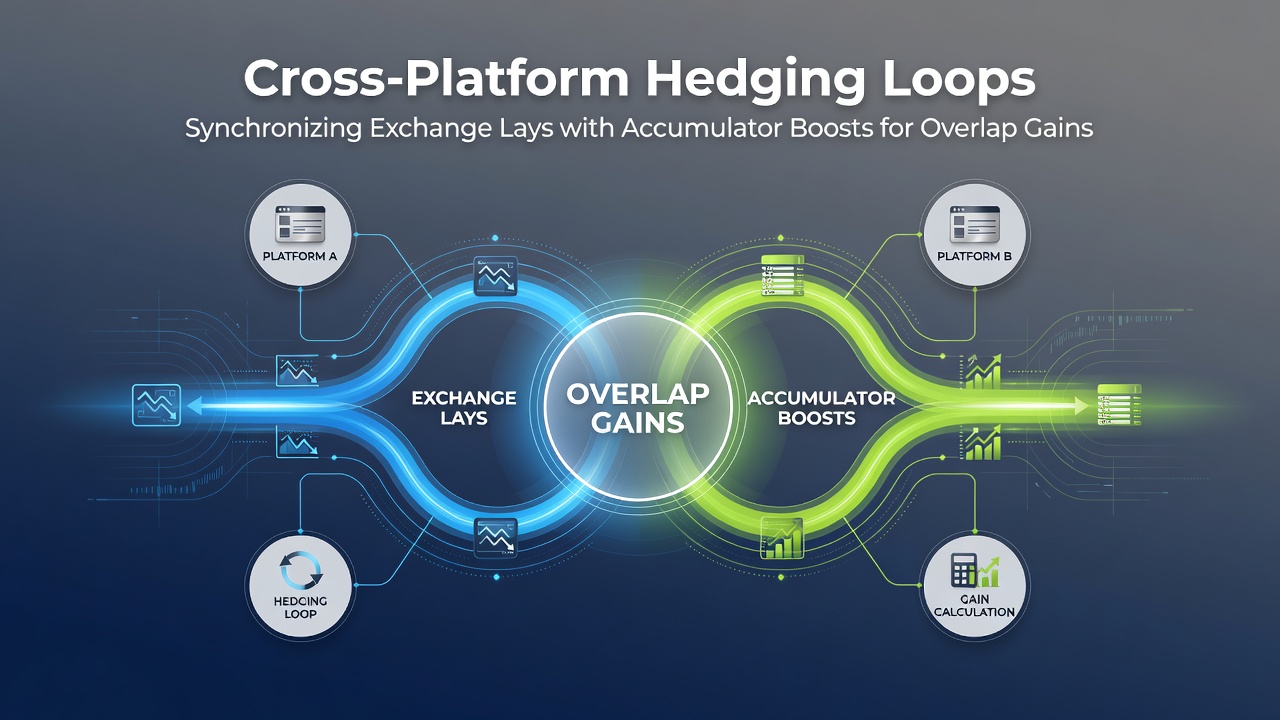
Cross-Platform Hedging Loops: Synchronizing Exchange Lays with Accumulator Boosts for Overlap Gains
Cross-platform hedging loops combine lay positions on betting exchanges with accumulator promotions offered by traditional bookmakers, and operators track these patterns through data on overlap returns that emerge when multiple outcomes align across platforms. Research from industry reports shows that participants synchronize lay bets on exchanges such as Betfair with boosted accumulator wagers to create positions where partial coverage reduces exposure while capturing promotional value.
Mechanics of Exchange Lays in Hedging Structures
Betting exchanges allow users to lay selections at specific odds, which means taking the opposite side of a traditional bet, and when these lays align with accumulator boosts that offer enhanced payouts on multi-leg selections, the combined structure produces overlap gains in scenarios where some legs succeed and others fail. Data indicates that traders monitor real-time odds movements across platforms because shifts in exchange liquidity can alter the ratio of lay prices to boosted accumulator returns, creating windows where the net position yields a locked calculation based on the remaining outcomes.
Those who study these methods note that timing plays a central role, since accumulator boosts often carry time-limited availability while exchange markets fluctuate continuously during events. Figures from trading volumes reveal that peak activity occurs when major football leagues schedule multiple fixtures on the same day, allowing multiple accumulator legs to overlap with corresponding lay opportunities on exchanges.
Accumulator Boost Integration and Overlap Calculation
Accumulator boosts multiply returns on selections that meet minimum leg requirements, yet when hedged against exchange lays the effective payout adjusts according to the proportion of successful outcomes that remain unhedged. Observers note that precise stake allocation across the boosted accumulator and the offsetting lays determines whether the final position produces a positive overlap or maintains neutrality regardless of partial results. Studies of market data from 2025 demonstrate that participants who adjust stakes in increments of 5 to 10 percent based on live exchange odds achieve more consistent overlap figures than those using fixed ratios.
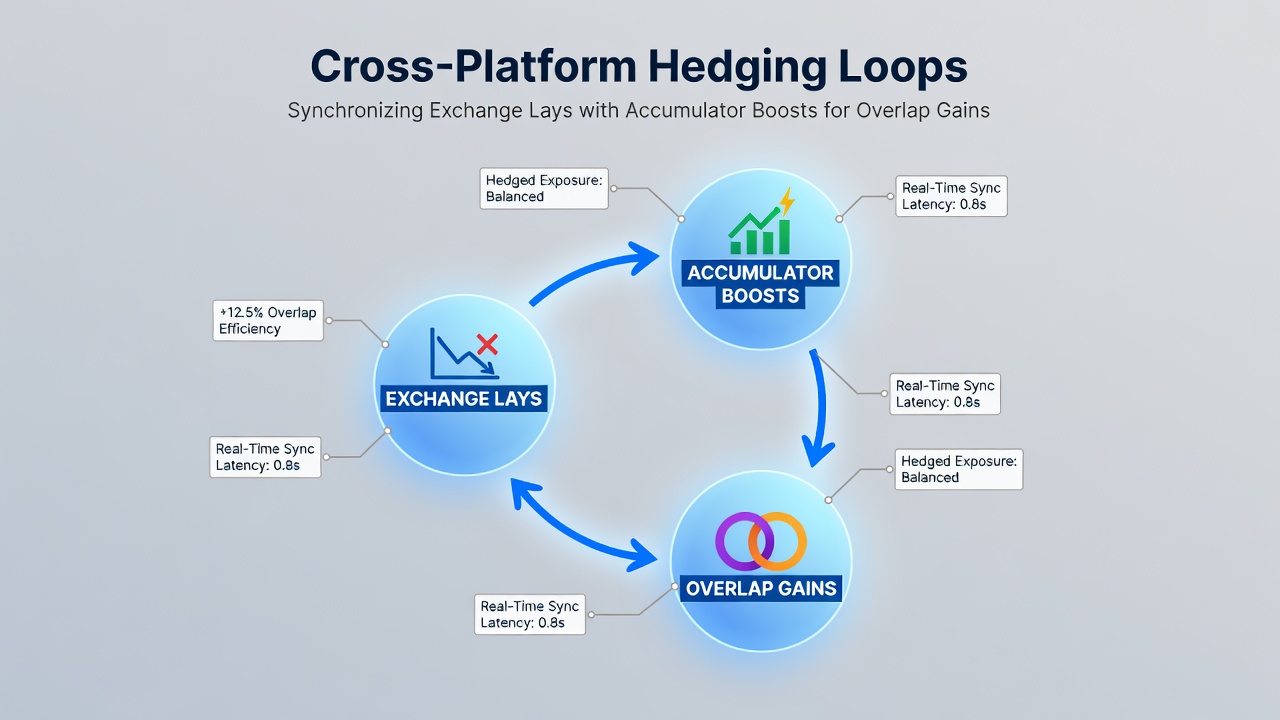
Platforms update accumulator terms frequently, and regulatory filings from the Malta Gaming Authority record that operators must disclose boost conditions at least 24 hours before activation in certain jurisdictions. This disclosure requirement allows those monitoring multiple sites to prepare lay positions on exchanges ahead of boost launches, which in turn influences the volume of cross-platform activity recorded in August 2026.
Platform Synchronization Practices Observed in 2026
Market participants coordinate actions across desktop and mobile interfaces because accumulator promotions often appear first on mobile apps while exchange order books update faster on desktop terminals. Reports compiled by the Canadian Gaming Association indicate that latency differences between platforms average 1.8 seconds during high-volume periods, and those differences can shift the available lay price by several percentage points. Traders therefore place exchange orders in stages, beginning with partial stakes that allow adjustment once the accumulator boost confirmation arrives.
Software tools that aggregate odds from both sides of the market assist in identifying potential overlap points, and academic papers published in 2025 by researchers at the University of Sydney examined how such tools affect execution speed without altering the underlying mathematical relationships between lay prices and boosted returns. The analysis found that automated alerts reduce the time between boost activation and lay placement, yet the core overlap calculation remains dependent on the accuracy of the initial stake distribution.
Conclusion
Cross-platform hedging loops rely on the precise alignment of exchange lay positions with accumulator boost terms, and data from multiple regulatory and academic sources shows that synchronization practices continue to evolve with platform updates and market conditions through 2026. Participants calculate overlap gains by balancing the boosted return against the lay exposure across selected outcomes, and external factors such as fixture scheduling and regulatory disclosure timelines influence the frequency of viable opportunities.